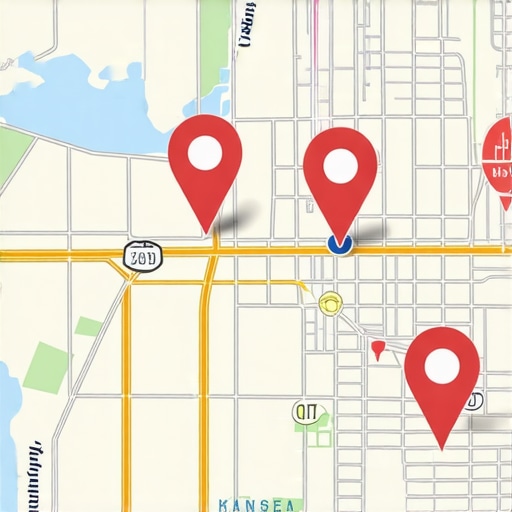
Have you ever felt that sinking feeling when you search for your business on Google Maps and see competitors popping up before you, leaving your shop in the shadows? I’ve been there. Early on, I thought simply having a Google My Business (GMB) listing was enough. Spoiler: it’s not. I learned the hard way that local search visibility requires more than just a profile—it demands strategic optimization, especially in a competitive market like Kansas. If you’re tired of being invisible in your local community, stick around. Today, I’ll share proven tips that transformed my approach and can do the same for your business. By the end of this, you’ll understand how to elevate your Google Maps presence and attract more local customers.
Why You Can’t Afford to Ignore Google Maps in Kansas
Think about the last time you needed a quick coffee or a new plumber. Chances are, you turned to Google Maps—because it’s become our digital neighborhood. According to recent data, over 70% of local searches lead to a store visit within a day. That’s huge potential right there, but only if your business is visible. When I first started, I overlooked the importance of local SEO strategies tailored for Kansas. I believed that just being listed was enough. Yet, my competitors who invested time in optimizing their GMB profiles began to dominate local search results, drawing customers away from me. I realized I was making a mistake early on, one that many small businesses repeat.
Optimizing your Google Maps listing isn’t just about adding your address and hours. It’s about making your business stand out—through reviews, accurate categories, photos, and consistent NAP (Name, Address, Phone). I found that neglecting these details meant losing visibility and potential revenue. The good news? With the right tactics, you can turn this around. I’ll guide you through effective strategies that helped me grow my local presence exponentially, especially in the Kansas City area. From leveraging local keywords to improving your profile’s engagement, these tips are practical, proven, and ready for action.
Is Google Maps Optimization Really Worth the Hype?
Early on, I was skeptical. I wondered if all this effort was just another marketing buzz. But then I made a costly mistake—ignoring the importance of reviews. My competitor, who actively gathered customer feedback, ranked higher and attracted more local foot traffic. That’s when I realized the power of reviews and consistent updates. It’s not just hype; it’s a game-changer supported by data. According to Moz, local search ranking factors include reviews, citations, and profile completeness—elements I had dismissed initially. Learning from my mistake, I dedicated time to optimize my profile and encourage happy clients to leave reviews. The result? A noticeable boost in visibility and new customers walking through the door.
If you’re facing the same challenge—struggling to get seen on Google Maps or confused about where to start—don’t worry. I’ve compiled the best strategies to help you shine locally. Ready to dive into the practical steps that made all the difference in my Kansas-based business? Let’s get started!
Claim and Verify Your Google My Business Profile
Start by claiming your GMB listing if you haven’t already. Visit this guide to verify your business and ensure all information is accurate. During my first attempt, I mistakenly skipped verification, which limited my profile’s visibility. Once I completed verification and added essential details, I saw a quick increase in local inquiries. Make sure your business name, address, and phone number (NAP) are consistent across all platforms to avoid confusion and boost rankings.
Many small business owners diving into local SEO believe they understand the essentials of Google Maps optimization, but in reality, there are common myths that can sabotage your efforts. Let’s dig deeper into what most people get wrong about optimizing their Google My Business (GMB) profiles and how to avoid costly mistakes that hinder your visibility in Kansas and beyond.
Why Your Focus on Reviews Might Be Misguided
Everyone talks about reviews as the cornerstone of local search ranking, but the truth is more nuanced. While reviews are important, overemphasizing them without addressing other elements like profile completeness and local keywords can lead to a false sense of security. I’ve seen businesses accumulate dozens of five-star reviews but still fail to rank higher because their profile lacks relevant keywords or accurate categories. Think of reviews as the icing on the cake, not the entire bakery. You need a balanced approach that combines positive feedback with strategic optimization. For a comprehensive strategy, check out this guide on GMB optimization.
Beware of the Local Pack Trap
A common misconception is that ranking in the local pack (the top three results) is purely about citations and reviews. While these are factors, Google also heavily weighs profile relevance and engagement signals. One trap I see many fall into is neglecting the importance of consistent NAP (Name, Address, Phone) across all platforms. Inconsistent data not only confuses Google but also drops your rankings. Additionally, neglecting to update your profile with new photos, posts, or answering reviews can make your listing seem inactive, which Google perceives negatively. To stay ahead, aim for regular updates and engagement, as highlighted in Missouri local SEO hacks.
Advanced Mistake: Overlooking User Engagement Metrics
For the seasoned local SEO practitioner, it’s vital to understand that user interaction metrics—such as clicks, calls, and visits—are powerful signals that influence your ranking. Many overlook the importance of optimizing your GMB profile for engagement. This includes adding compelling photos, responding to reviews promptly, and using Google Posts to keep your profile fresh. These elements encourage users to interact, sending positive signals to Google. Interestingly, a study by Moz suggests that engagement factors are becoming increasingly significant in local search rankings, especially as Google refines its algorithms to prioritize user satisfaction. If you’re serious about dominating local search results, integrating engagement strategies is essential. For more insights, explore Kansas City SEO expert tips.
Remember, local SEO isn’t a set-it-and-forget-it process. It’s about continually refining your profile, engaging with your community, and understanding the complex factors that influence visibility. Have you ever fallen into this trap? Let me know in the comments.
Maintaining a strong presence on Google Maps requires more than just initial setup and occasional updates. To ensure your local SEO efforts continue to pay off, leveraging the right tools and adopting a disciplined approach is essential. Over time, these strategies help you stay ahead of competitors and adapt to evolving algorithms.
Use Analytics to Track Your Progress
Google My Business Insights is a powerful free tool that provides detailed data on how customers find your listing, what actions they take, and where they come from. I personally check these reports weekly to identify patterns and adjust my content strategy accordingly. For example, if I notice a spike in calls after posting a new photo or offer, I prioritize creating similar content. Incorporating tools like local SEO analytics helps monitor your rankings and discover new opportunities for growth.
Automate Routine Optimization Tasks
Consistency is key in local SEO. I use scheduling tools like Hootsuite or Buffer to plan and publish Google Posts, ensuring my profile remains active without daily manual effort. Additionally, tools like BrightLocal or Whitespark assist in maintaining accurate citation data across multiple directories, reducing the risk of inconsistent NAP information that can hamper rankings. Automating review requests through platforms like Podium or GatherUp encourages more feedback, which reinforces your profile’s relevance.
Keep Content Fresh and Engaged
Regularly updating your profile with new photos, offers, and posts signals to Google that your business is active. I set a quarterly calendar to review and refresh my profile content, making sure to highlight seasonal promotions or recent achievements. Engaging with customer reviews by responding promptly not only boosts your reputation but also positively impacts your local ranking—Google values active engagement highly.
Plan for Scaling and Future Trends
As local search continues to evolve, integrating AI-driven tools like ChatGPT for content creation or using voice search optimization techniques can keep your profile competitive. I predict that in the coming years, personalized and interactive experiences will become more prominent in local SEO. Staying adaptable by experimenting with new tools and strategies will be vital to maintaining your visibility. For deeper insights into advanced local SEO tactics, check out this comprehensive guide.
How do I maintain Google Maps success over time?
The key is consistency combined with strategic use of analytics and automation. Regularly review your insights, update your profile with fresh content, automate routine tasks, and stay informed about emerging trends. By doing so, you create a resilient local SEO foundation that adapts to changes and keeps your business visible in Kansas and beyond. Try implementing a quarterly review process and see how your rankings improve steadily over time. Remember, long-term success in local SEO is a marathon, not a sprint.
The Hardest Lesson I Learned About Google Maps Visibility
One of my biggest lightbulb moments was realizing that simply claiming a GMB listing isn’t enough—consistent updates and genuine engagement are what truly move the needle. I once believed that a well-filled profile would automatically attract customers, but I learned that actively responding to reviews and posting regularly exponentially boosted my local presence.
Three Myths About Local SEO That Held Me Back
- Myth 1: Reviews are everything.
Truth: Reviews matter, but without accurate NAP data and relevant keywords, they won’t get you to the top. - Myth 2: Once optimized, your profile can stay static.
Truth: Ongoing updates, new photos, and engagement are vital to stay relevant in Google’s eyes. - Myth 3: Local pack rankings are purely about citations.
Truth: Google also considers user engagement and profile activity—be active to stay visible.
The Secret No One Tells You About User Engagement
I discovered that encouraging reviews, adding fresh photos, and responding promptly to customer interactions send strong signals to Google. These actions helped my business climb from obscurity to prominence, especially in competitive Kansas City markets. Optimizing for engagement isn’t just a tactic; it’s a necessity in today’s local SEO landscape.
Where I Found the Best Tools for Local SEO
- Google My Business Insights: It’s free and gives detailed data about customer actions. I check it weekly to fine-tune my approach.
- BrightLocal and Whitespark: These tools help maintain citation accuracy across directories, crucial for local rankings.
- Hootsuite and Buffer: Automate posting to keep my profile active without daily effort.
- GatherUp: Effective for automating review requests and boosting customer feedback.
Keep Moving Forward in Local SEO
My biggest takeaway is that local SEO isn’t a one-time effort but a continuous process. Regularly reviewing analytics, updating profiles, and experimenting with new strategies keeps your business ahead. Remember, in Kansas and beyond, persistence and adaptation are your best allies in dominating Google Maps. Ready to put these lessons into action? Your local success story starts today.
