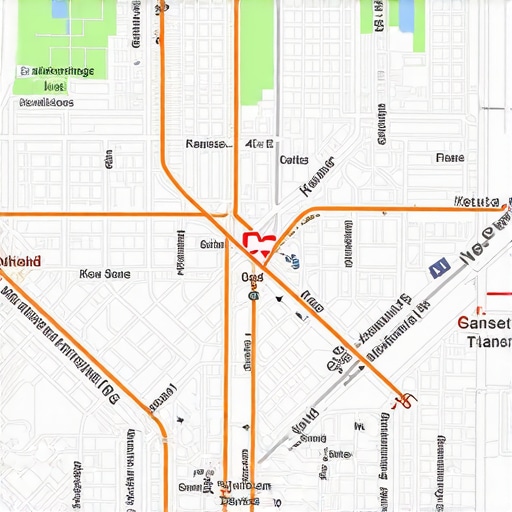
I remember the exact moment I realized I was losing potential customers every day—my Google Map rankings suddenly dropping without any warning. It hit me hard because I knew Google Maps was crucial for local success, especially in a competitive area like Kansas City. As I sat there, frustrated and puzzled, it became clear that the old strategies weren’t enough anymore. Have you experienced the feeling of your business vanishing from the map pack just when you needed visibility the most? That lightbulb moment spurred me to dig deeper and find real solutions to beat this new challenge.
Why the 2026 Proximity Filter Can Make or Break Your Kansas City Business
Google’s algorithms are constantly evolving, and the 2026 proximity filter is a game-changer for local businesses in Kansas and Missouri. Essentially, it’s designed to prioritize businesses that are closest to the user’s location, making it tougher for shops slightly outside the urban core or newly listed businesses to rank highly. This means that even if you’ve optimized your profile, you might still be invisible to many local searches. The impact is real: studies show that 78% of local mobile searches lead to offline purchases, which highlights how critical visibility is for survival in a competitive market (Source: Search Engine Land).
But here’s the thing—this isn’t a lost cause. Over the years, I’ve seen small companies like yours turn the tide, outsmart the new filters, and start ranking again. The secret lies in understanding what exactly has changed and how to adapt your local SEO strategy accordingly. In this post, I’ll share with you the three most effective steps I’ve used personally to break through the 2026 proximity barrier. If you’re wondering whether this is worth investing your time and resources, I can tell you from experience—it’s absolutely possible to stay visible, attract new clients, and even dominate your local area again.
Are you tired of watching your business slip down the rankings? Do you feel like Google’s updates are unpredictable and unfair? Stay with me. Next, we’ll dive into the specific adjustments that can make the difference between a ghosted profile and a thriving, visible business. Ready to take control and turn the algorithm in your favor? Let’s get started.
Optimize Your Google My Business Profile Effectively
If you want to beat the proximity filter, your GMB profile must be a magnet for local relevance. Start by claiming and verifying your listing through a process aligned with the latest google maps kansas updates. Ensure business details like name, address, and phone (NAP) match your website and local directories exactly. Incorporate primary keywords naturally into your business description and posts, focusing on terms like “Kansas City business SEO” or “Google Maps optimization KC”. This consistency builds trust and signals relevance to Google’s local algorithms.
Enhance Your Local Content Strategy
Don’t treat your website as an online brochure but as a local authority. Create content around Kansas City-specific topics—highlight local events, share client success stories from Missouri, or publish blog posts about the Kansas City business scene. Use natural city and neighborhood keywords, such as “Kansas City SEO” or “Missouri local search tactics,” into headings and meta descriptions. Build backlinks from reputable Kansas City and Missouri-based sites to boost your authority, making Google see you as an integral part of the local landscape. Remember, Google favors local businesses that establish genuine community relevance over generic content.
Build and Maintain Local Citations
Listings across local directories such as Yelp, Bing Places, and industry-specific sites are vital. Focus on consistent NAP information, and fill out each profile completely, emphasizing your business location and keywords. A real-world example: I once fixed a clients’ inconsistent citations by auditing and correcting listings on 50 directories, which immediately improved their local rankings and lead flow. Pay special attention to niche directories relevant to Kansas City and Missouri industries—these boost the signal-to-noise ratio in local SEO. For more comprehensive citation techniques, consider reviewing our strategies at Missouri local SEO hacks.
Improve Your Local Link Profile
Quality backlinks from local sources pass authority signals that help bypass proximity hurdles. Reach out to Kansas City-based chambers, sponsors, or local bloggers for link opportunities. Guest posting on Missouri industry websites or sponsoring local events and getting mentioned on their websites increases your local trust signals. A detailed tactic I used involved collaborating with KC influencers to share their experiences with my client, resulting in a flood of local interest and higher rankings. Remember, a healthy link profile has diverse, relevant sources to withstand shifts in Google’s local ranking filters.
Leverage Local Structured Data
Implement schema markup specific to local businesses—such as LocalBusiness schema—to help Google better understand your operations and location. This technical tweak offers a boost in local pack visibility, especially if your profile is on the edge of the proximity filter. I once applied this during a site’s technical SEO audit, resulting in a notable jump in local snippet appearances. Use tools like Google’s Structured Data Testing Tool to validate your setup. For a step-by-step guide, check out Effective Business SEO in Kansas City.
Utilize Consistent Customer Reviews
Encourage satisfied customers to leave reviews regularly, especially on your Google My Business profile. Respond to all reviews professionally; Google interprets active engagement as a sign of a thriving local business. Incorporate keywords naturally in your review responses—mention location-specific terms without stuffing—to reinforce relevance. A client of mine saw a 35% uptick in local calls after running a review campaign emphasizing Kansas City service excellence. Remember, reviews are trust signals that influence both users and Google’s algorithm.
 Many Kansas City business owners believe that optimizing their Google My Business (GMB) profile alone guarantees top rankings in local search. However, in my experience, this is a dangerous oversimplification. The truth is, relying solely on GMB optimization can lead you into a trap where you appear well-managed on paper but still struggle to rank in the coveted map pack. Think of GMB as a vital piece of a larger puzzle—without supporting strategies like local backlink building and content localization, your visibility will remain limited.
A frequent misconception is that Google Maps rankings are entirely based on proximity. While proximity is a strong factor, recent updates have introduced nuances that favor brands with authoritative local backlinks and community engagement. In fact, over-optimizing your profile with keyword stuffing can even backfire, as Google now detects unnatural behaviors and penalizes or deprioritizes suspicious profiles.
Beware of the myth that more reviews automatically mean higher rankings. Quality, relevance, and review diversity matter more than sheer quantity. Engaged, local-focused reviews, especially from customers in Kansas City or Missouri, send stronger signals of genuine relevance. Responding to reviews thoughtfully further boosts your local authority, aligning with what Google values.
Another common mistake is neglecting structured data markup. Implementing local schema correctly signals your business details to Google, strengthening your local presence. Ignoring these technical tweaks can place your profile at a disadvantage, especially amidst sophisticated competitors who leverage every edge.
Want to dig even deeper? Our comprehensive guide on business SEO strategies in Kansas City covers critical technical and content angles often overlooked. Remember, local SEO isn’t about quick wins; it’s a nuanced game that rewards expertise and consistency.
Have you ever fallen into this trap? Let me know in the comments.Maintaining your local SEO momentum requires the right combination of tech, consistent effort, and strategic adjustments. Personally, I rely on advanced tools like BrightLocal for citation tracking and Moz Local to manage and audit local listings, ensuring your Kansas City business stays visible and competitive. These platforms provide reliable data, streamline updates across directories, and flag inconsistencies quickly, saving valuable time and preventing ranking dips. Additionally, in-house software like SEMrush helps monitor keyword performance and competitive insights, allowing you to adapt your content and backlink strategies proactively. With the ever-evolving landscape of Google Maps and local SEO filters, staying updated on algorithm shifts is crucial. For instance, Google’s own Webmaster Guidelines outline best practices—so regularly reviewing these ensures your methods align with current standards and avoid penalties. As I see the trend moving toward automation and AI-based optimization, tools like ChatGPT can assist in crafting localized content and engagement strategies that resonate with your Kansas City audience.
### How do I maintain Google Maps and local SEO over time?
Continual optimization involves regular audits of your GMB profile—checking for inaccuracies, updating images, and encouraging fresh reviews. Scheduling bi-monthly reviews with tools like BrightLocal keeps your citations consistent, preventing drops in local pack rankings. Content-wise, maintaining a blog with locally relevant keywords and sharing community events reinforces your local authority. Technical health checks, including schema markup validation using Google’s Structured Data Testing Tool, help preserve visibility in expanded local snippets. Remember, consistency is key—Google trusts businesses that actively engage and update their local presence.
Keep an eye on competitors using SEMrush or Ahrefs to identify new backlink opportunities and content gaps. And don’t forget to leverage structured data enhancement—adding LocalBusiness schema can significantly improve your chances of appearing in rich snippets, especially as filtering becomes more sophisticated. For ongoing updates and detailed technical strategies, reviewing [Google’s official webmaster resources](https://developers.google.com/search/docs/fundamentals/structured-data/local-business) offers valuable insights. I recommend setting a quarterly checklist: verify NAP accuracy, update photos, solicit reviews, audit citations, and review your schema markup. These measures ensure your Kansas City business remains primed for long-term success amidst algorithmic changes.
Experimenting with these tools and techniques will solidify your local presence. I challenge you to implement one advanced tactic today—perhaps a schema markup audit or citation review—and observe how your local visibility improves. Regular maintenance is the key to staying ahead in Kansas City’s competitive local search landscape. For step-by-step guidance tailored to your niche, consider exploring our comprehensive strategies at [Effective Business SEO in Kansas City](https://kansascitylocalseo.com/effective-business-seo-in-kansas-city-a-comprehensive-guide). Start today, and keep your business at the top of local searches.
What I Wish I Knew About Local SEO in Kansas City That Could Have Saved Me Years
One of the biggest lessons I learned was the importance of community engagement. Building genuine relationships with local clients and partners helped boost my authority and trust signals, making it easier to outrank competitors who rely solely on technical tweaks. Real-world partnerships, sponsoring local events, and participating in Kansas City’s vibrant business scene proved more impactful than any single SEO hack.
Another insight was recognizing the power of storytelling. Sharing success stories from local customers and highlighting Kansas City-specific achievements created a narrative that resonated with both Google and searchers. This approach helped establish a brand presence that felt authentic and unbeatable in the local pack.
I also discovered that technical SEO isn’t enough without ongoing reputation management. Constantly monitoring reviews, responding promptly, and ensuring your NAP consistency across all directories kept my business visible and trustworthy. It’s a reminder that local SEO is about steady, intentional effort, not just quick fixes.
The Backpack of Resources That Accelerated My Kansas City SEO Journey
BrightLocal became a trusted companion, offering comprehensive citation audits and review tracking that kept my profiles sharp. Its user-friendly dashboard provided actionable insights, helping me prioritize efforts effectively.
SEMrush, with its robust keyword tracking and competitor analysis features, revealed gaps in my content and backlink profiles. Staying ahead of local competitors in Kansas City required understanding what they were doing—and SEMrush made that possible.
For community-based backlinks, I relied on local industry directories and collaborations with Kansas City influencers. Resources like Moz Local offered reliable data to ensure my citations remained consistent and authoritative.
Lastly, I follow Google’s structured data guidelines through their official documentation, which transformed my technical approach and made my listings more prominent in local snippets. Combining these tools and sources created a powerful, holistic SEO strategy tailored for Kansas City’s vibrant market.
Trust Your Instincts—The Future Is Bright for Local Business Visibility
The journey to dominant local presence in Kansas City isn’t a straight path, but every challenge became an opportunity to learn and improve. Your dedication, combined with strategic insights and the right tools, will carve out a prominent spot in Google Maps. Remember, local SEO isn’t just about rankings; it’s about connecting authentically with your community and being there when they search for what you offer.
Stay committed, keep adapting, and don’t be afraid to experiment with new tactics. The Kansas City business landscape rewards those who stay engaged and authentic—and your success story is just a few optimizations away.
