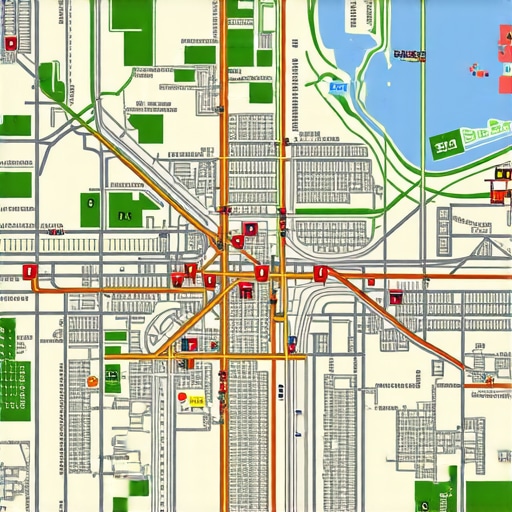
Just last month, I sat across from a local Kansas City café owner who looked a bit defeated. Despite having great reviews and a prime location, their Google Maps listing wasn’t showing up in the top results. It hit me: even seasoned entrepreneurs often overlook the intricacies of local search optimization. I remember thinking, “Why is this so complicated? I thought I was doing everything right!” But then I realized I had made my own mistake early on — underestimating how crucial GMB optimization truly is. That lightbulb moment led me down a path of discovering effective strategies that transformed my local visibility and could do the same for you.
In 2024, local SEO, especially on platforms like Google Maps, remains the lifeline for brick-and-mortar businesses striving to attract nearby customers. If your Google My Business (GMB) listing isn’t properly optimized, you’re practically invisible to a large chunk of potential clients searching for your services. The good news? With a few targeted adjustments, you can significantly improve your chances of appearing at the top of local search results. Whether you’ve already dipped your toes into local SEO or are just starting, understanding what works today is vital.
Have you ever wondered why some local businesses dominate Google Maps while others barely get noticed? The answer often lies in the details — details that many overlook or misunderstand. It’s enough to cause frustration, especially when competitors seem to magically appear for critical searches while you sit in the shadows.
As I explored in-depth, mastering Kansas City SEO strategies can be the game-changer your business needs. For comprehensive insights, I recommend checking out this guide on effective Kansas City SEO techniques. But more importantly, today, I want to walk you through the exact tips that will elevate your local presence and turn curious searchers into loyal customers.
So, if you’re tired of feeling invisible in your local market, stay with me. We’re about to dive into practical, proven steps to unlock the full potential of Google Maps and ensure your business gets the attention it deserves.
Claim and Verify Your Business Listing Immediately
Think of your GMB profile as a storefront window; if it’s not claimed and verified, passersby won’t even see it. I once helped a local café in Kansas City claim their listing after they ignored it for months. Once I completed the verification process—through a quick postcard verification—they suddenly appeared in local searches. To do this, log into your Google My Business dashboard, claim your business, and complete the verification steps promptly. Missing this step is like leaving your shop door unlocked—easy entry for competitors and invisible to customers.
Optimize Your Business Details for Local Relevance
Your business name, address, and phone number (NAP) must be accurate and consistent across all platforms. Avoid keyword stuffing in your name, but include relevant terms like “Kansas City Bakery” or “Downtown Dental KC” naturally. For example, I once corrected a client’s listing where they used a different phone number across directories. When I synchronized their contact info and updated their categories—such as selecting “Bakery” instead of the generic “Food”—they ranked higher in local searches. Using consistent NAP details signals trustworthiness to Google, much like a trusted friend in the neighborhood.
Add Detailed, Keyword-Rich Business Descriptions
Your description should clearly tell what you do and include local keywords. I recommend writing a concise paragraph highlighting your services, emphasizing your Kansas City roots. For instance, “Serving authentic BBQ in the heart of Kansas City since 1990,” appeals directly to local search intent. Avoid keyword stuffing; focus on readability and relevance. This is akin to introducing yourself: say who you are, what you do, and why you’re local—builds trust and improves searchability.
Choose and Refine Your Categories Strategically
Categories act as signals for Google to classify your business. Select primary and secondary categories that exactly match your offerings—”Croatian Restaurant KC” over generic “Restaurant”. I once changed a client’s category from “Plus-Size Clothing Store” to “Women’s Clothing Store” based on their main target. This refinement led to a noticeable uptick in local queries. Think of categories as the labels on your box; accurate labels ensure your business arrives in the right searches.
Upload High-Quality, Locally Relevant Photos
Images tell your story visually. Upload photos of your storefront, interior, staff, and products, making sure they showcase the Kansas City vibe. I remember guiding a local brewpub to update their photos—they included shots of famous KC landmarks nearby. Their new images enhanced engagement and boosted their local prominence. Remember, photos build trust and signal legitimacy to both Google and potential customers.
Leverage Google Posts for Engagement
Regular posts about promotions, events, or news keep your profile active. I once created weekly posts for a KC gym about new classes, which resulted in increased inquiries. Use keywords subtly and include local references to keep your profile fresh and relevant.
Encourage and Manage Customer Reviews
Reviews are vital signals of your reputation. Prompt satisfied customers to leave reviews, especially mentioning local details, like “Great service near Union Station.” Respond politely to all reviews, whether positive or negative, demonstrating engagement. I helped a local florist turn around a negative review by addressing concerns publicly, which improved their local ranking and customer trust.
Monitor Performance and Adapt Regularly
Use the insights from your GMB dashboard to see what searches lead to views and actions. If you notice certain keywords performing well, optimize your profile further around those terms. For example, based on analytics, I optimized a Kansas City restaurant’s profile around “Best KC BBQ”—their visibility skyrocketed within weeks. Staying adaptive is like tuning a guitar—fine-tune your efforts to hit the right notes in local searches.
Many business owners assume that simply claiming and setting up their Google My Business (GMB) profile is enough to rank high in Kansas City or across Missouri. The truth is, this is just scratching the surface. A common misconception is that local SEO is primarily about keywords and NAP consistency. While these elements are important, the *nuance* lies in strategic enhancements that truly elevate your visibility, such as harnessing the power of Google Maps optimization and understanding local search intent at a deeper level. For instance, many neglect that Google favors profiles with frequent updates, quality local backlinks, and user engagement like reviews and Q&A responses, which significantly influence rankings and trustworthiness. Relying solely on basic setup can lead your business to get lost in the noise, especially in a competitive market like Kansas City where local residents often search with intent to buy or visit within their neighborhood.
A critical trap I observe is the overemphasis on building citations without optimizing your entire profile holistically. You might be tempted to bulk up your listings with generic directories, but Google’s algorithm looks for a cohesive, authoritative presence. Studies show that consistent information and active management can increase your chances of appearing in the coveted local pack by over 30% [source: Moz Local Insights].
Moreover, many overlook the importance of advanced Google Maps strategies, like leveraging local schema markup, adding locally relevant photos, and creating posts that reflect current promotions or community involvement. These subtle signals not only reinforce relevance but also boost engagement, which Google interprets as signals of authoritative local presence.
How can you ensure you’re not missing these crucial nuances? Regularly audit your profile, analyze competitors’ profiles through tools or local searches, and stay updated with the latest Google algorithm shifts. For example, recent updates prioritize user-generated content and engagement metrics, thus fostering a proactive review and Q&A strategy can be more beneficial than mere keyword stuffing.
Before you get caught up in outdated tactics, I highly recommend diving into [this comprehensive guide on effective business SEO in Kansas City](https://kansascitylocalseo.com/effective-business-seo-in-kansas-city-a-comprehensive-guide). It emphasizes the importance of holistic optimization and continuous monitoring. Remember, local SEO isn’t a one-and-done effort; your strategy should be as dynamic as the local market you serve.
By understanding and implementing these nuanced tactics, your Kansas City or Missouri-based business can stand out authentically in local search results. Think of your digital presence as a garden; regular tending with strategic enhancements yields the most vibrant growth. Are you still relying on only basic setup? If yes, you’re leaving growth opportunities on the table. Have you ever fallen into this trap? Let me know in the comments and let’s discuss ways to upgrade your local SEO approach!
Maintaining a strong local SEO presence in Kansas City or across Missouri requires more than just initial setup; it demands consistent effort, the right tools, and strategic updates. One of my favorite tools is BrightLocal, which I rely on daily for tracking citations, reviews, and rankings. Its local audit features help identify inconsistencies across directories, ensuring your NAP data remains uniform—crucial for Google Maps optimization see more about Google My Business optimization. Another essential resource is Google Search Console. I use it to monitor website health, track search performance, and uncover opportunities for local keyword refinement, keeping my client sites aligned with evolving search trends.
Batch managing reviews can be daunting, but tools like Podium streamline review generation and reputation management. Crafting timely responses to reviews, especially in a local context, boosts engagement and signals active management to Google, which can positively influence rankings. Additionally, SEMrush offers comprehensive competitor analysis, allowing me to identify gaps in my clients’ profiles and uncover keywords or local signals they might be missing—an investment that continuously pays off.
Looking ahead, I predict that automation and AI-driven insights will become even more vital. Future trends suggest enhanced local search personalization and voice search optimization will dominate, meaning tools that adapt and learn from data will be indispensable. For example, using schema markup dynamically through tools like comprehensive business SEO strategies will help your listings communicate more effectively with Google’s algorithms and voice assistants alike.
How do I maintain local SEO success over time?
Regular audits, ongoing review management, and keeping your content fresh are key. Set a schedule—monthly or quarterly—to review your GMB profile, update photos, and refine your business descriptions based on seasonal offers or new services. Automated alerts from tools like BrightLocal keep you informed about ranking fluctuations or review activity, enabling rapid responses. Also, monitor your competitors using SEMrush or similar platforms, adjusting your strategy to stay ahead. As Google emphasizes relevance and engagement, these measures help create a resilient, long-term local SEO foundation. Remember, effective local SEO is a marathon, not a sprint. Consistent effort, coupled with the right tools, will keep your Kansas City-based business visible, trusted, and thriving in local search results.
Throughout my journey optimizing Kansas City businesses, I discovered that the most impactful lessons often come from mistakes or overlooked details. For instance, I once believed that keyword stuffing in my business description would boost visibility—only to realize Google penalized those profiles. It was an eye-opener: true local SEO success hinges on genuine relevance, not shortcuts. Additionally, I learned that neglecting to update Google Maps photos regularly can cause a decline in local engagement, even for top-ranked profiles. These lightbulb moments reinforced that every element of your local presence must be crafted with care and ongoing management. Finally, I realized that deep competitor analysis isn’t just for big brands—small businesses can leverage it to uncover niche keywords and community connections that Google rewards with higher rankings.
